Heirloom pear varieties on the farm
We are proud to grow a number of interesting heirloom varieties not typically found in stores or commercial orchards. Here is a gallery, with images and descriptions, of the varieties on our farm that we have positively identified.
-
European Wild Pear
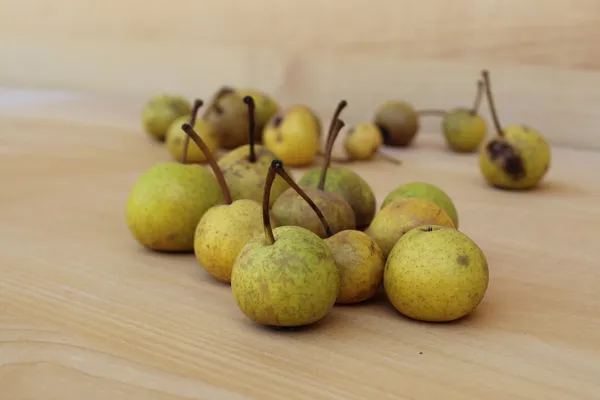
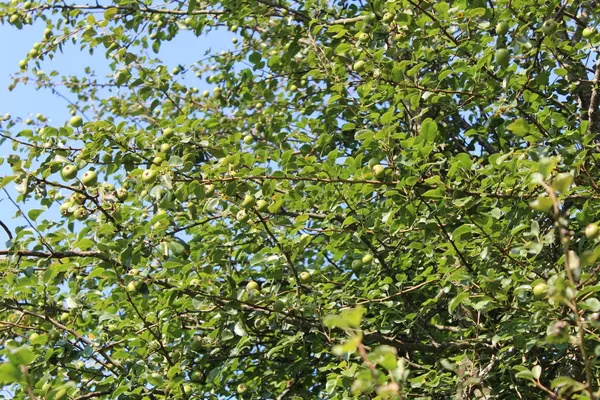
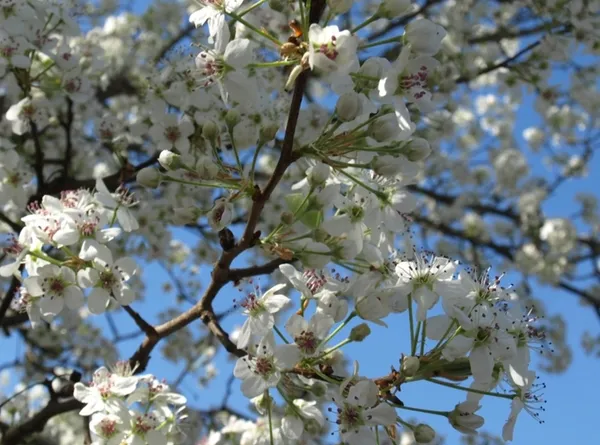
Pyrus pyraster, known as the European Wild Pear, is a wild species of pear in the Rosaceae family. It is native to Europe and western Asia, originally from regions of present-day Persia and Armenia. The species is considered one of the ancestors of the cultivated European pear (Pyrus communis subsp. communis), together with Pyrus caucasica. The wild pear can grow as a 3–4 m shrub or as a tree reaching 15–20 m. Its branches bear thorns, a key distinction from cultivated pears; flowers are white and appear from April to May. The fruits are small, 1–4 cm in diameter, round or slightly oval, often with curved stems. They ripen in late summer and early autumn. Fresh fruits are initially hard and astringent due to high tannin content but become edible when ripe and soft. They can be used for jam, jelly, juice, brandy, or dried for tea. Pyrus pyraster trees can live 100–150 years.
-
Beurre Hardy (Hardijeva)
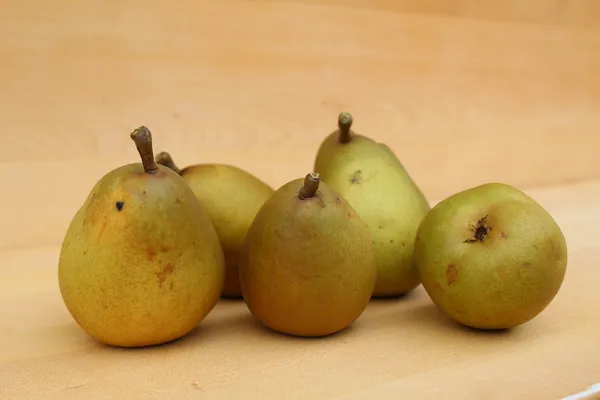
Beurre Hardy (Hardijeva) is an old French pear variety, likely named after Julien-Alexandre Hardy, chief gardener and Director of Arboriculture at the Luxembourg Gardens in Paris in the 19th century. The fruits are medium to large, round to slightly elongated. The base color is green with a russet-brown overlay and a warm ochre tint on the sunny side. The flesh is creamy, yellowish-white, very juicy, sweet, and aromatic, with a refreshing, slightly tangy flavor that makes it one of the most flavorful pears. The skin is somewhat firm, so peeling is recommended before eating or processing. It is a fine table pear, also suitable for compotes and marmalades. Fruits must fully ripen on the tree to avoid residual astringency. It ripens in September and keeps for only a few weeks in storage. The tree is tall and narrow, with vigorous growth and long shoots that bend or break under heavy yields. It bears irregularly and never excessively.
-
Bella di Giugno (Junijska lepotica)
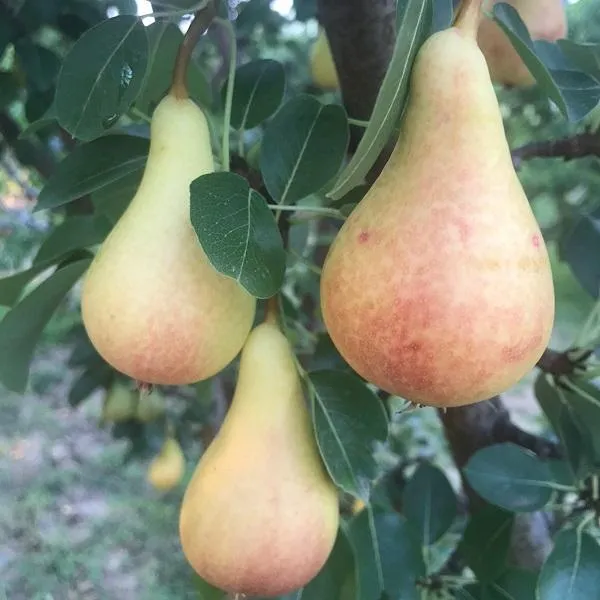
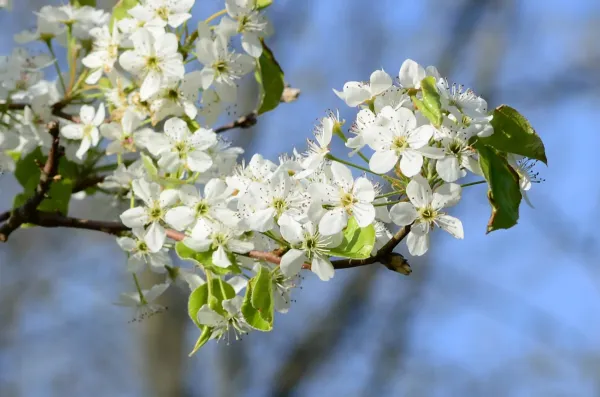
Bella di Giugno (Junijska lepotica) is an old Italian pear variety of unknown parentage. It is an early summer variety, highly productive and also a good pollinator. It flowers early and is sensitive to frost during bloom. Fruits are small to medium-sized, with an elongated pear shape and a short to medium stem. The skin is smooth and light green, often covered with a dark red blush on the sunny side; the green base color turns yellow as it ripens. Tiny russet lenticels are densely scattered across the surface. The flesh is yellowish-white, moderately firm and juicy, sweet, and pleasantly flavored with a subtle acidity. It ripens from late June to early July. It is excellent for fresh eating, fruit salads, or juice, but does not store well.
-
Clapp’s Favourite (Klapova)
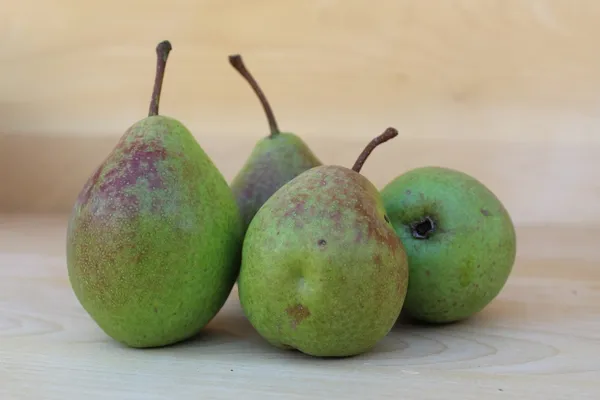
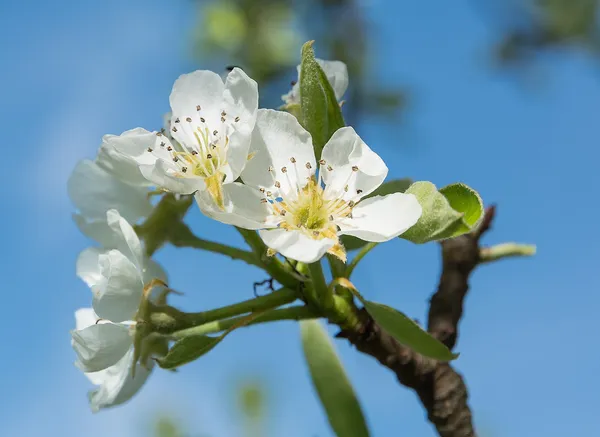
Clapp’s Favourite (Klapova) is an American variety raised in 1860 by Thaddeus Clapp in Massachusetts. It is believed to be a seedling of the Flemish Beauty pear. The fruits are medium to large and sometimes slightly elongated in cooler climates. The skin is smooth and dry, light green when picked, turning yellow-green with a dull red blush on the sunny side as it ripens. Small pale lenticels are scattered across the surface. The flesh is yellowish-white, fine-textured, melting, and very juicy, with a sweet-tart, aromatic flavor typical of high-quality summer pears. The tree grows moderately vigorously, with upright scaffold branches that bend under fruit weight. It enters bearing moderately late, producing regular, medium yields. The crown is moderately sparse. The fruits are picked in September and can be eaten through November.
-
Poire de Curé (Pastorjevka)
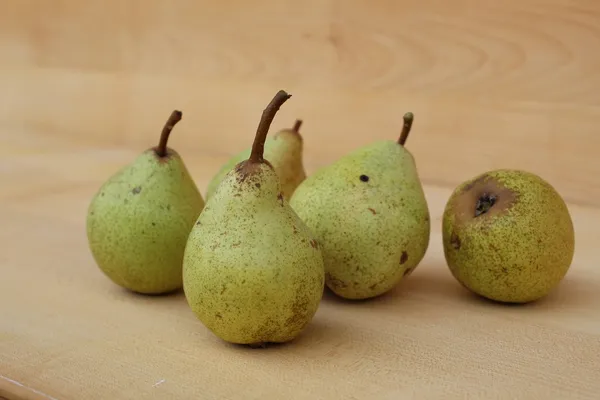
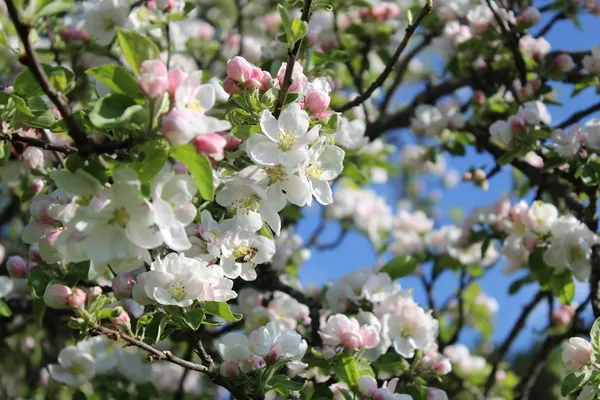
Poire de Curé (Pastorjevka) was discovered in the wild in 1760 near the French town of Clion by a pastor named Leroy. Its parentage is unknown. The fruits are elongated, medium to large in size, and often display a characteristic rust-colored streak that runs along the length of the fruit from stem to calyx. The base color is gray-green, turning yellow when ripe, with a faint reddish hue on the sun-exposed side. The flesh is yellowish-white, firm, and somewhat coarse in texture, with a mild and modest flavor. It is highly tolerant of diverse growing conditions, productive, and reliable. The tree grows vigorously and forms a pyramidal crown densely covered with short fruiting spurs. The fruits are picked in October and can be eaten through December. It is suitable both as a table pear and for kitchen use. The variety is also valued in nurseries for its excellent compatibility with quince rootstock, and is often used as an intermediate grafting variety.